
For the first six months of the generative revolution, the “prompt engineer” was the celebrated protagonist of the story. The narrative was simple: if you could just find the right combination of adjectives and technical jargon, the model would eventually yield the perfect result. But as content teams move from experimental play into high-volume production, that “one-prompt” mindset is becoming a bottleneck, highlighting the importance of a structured approach to AI adoption that emphasizes scalable workflows over isolated experimentation. Real operators those responsible for delivering consistent, brand-aligned assets on a deadline are shifting their focus toward model routing and pipeline architecture.
The core challenge isn’t finding a “perfect” model; it’s understanding that different models excel at different depths of the creative process. In the Banana Pro AI ecosystem, this manifests as a choice between structural speed and semantic fidelity. When you are looking at a blank canvas, the most common mistake is asking a high-compute, high-fidelity model to do the heavy lifting of basic ideation. It is slow, expensive in terms of time, and often results in “model fatigue,” where the operator settles for a mediocre composition because they have already spent twenty minutes waiting for high-resolution renders.
The Myth of the Universal Model
There is a persistent belief that a single generative model should handle an entire project from the first “grain of an idea” to the final 4K export. In a professional workflow, this is rarely efficient. If you are testing thirty different layouts for a product shoot, you do not need 4K textures, realistic skin pores, or intricate atmospheric lighting in every iteration. You need to know if the subject is framed correctly and if the color palette hits the brand’s mood board.
Using a high-fidelity model for initial brainstorming is like hiring a master oil painter to do your thumbnail sketches. It’s overkill. More importantly, it can be counterproductive. High-fidelity models often “over-commit” to details early on, making it harder to pivot the composition without a total reroll. This is why we advocate for a routing mindset: the ability to recognize when an asset needs the raw speed of a layout-focused model and when it requires the sophisticated semantic understanding of an AI-driven polisher.
Phase One: Laying the Structural Foundation with Nano Banana
The production cycle starts with the “Block-In” phase. Here, the priority is composition, lighting direction, and core subject placement. This is where Nano Banana enters the pipeline as the primary structural tool. Its strength lies in its low latency and its ability to follow spatial prompts without getting bogged down in pixel-perfect rendering.
When an operator uses this model, they aren’t looking for a finished product. They are looking for the “skeleton.” For example, if you are designing a series of social media banners for a tech launch, you might run fifty variations of “abstract glass spheres, neon lighting, minimalist background” in the time it would take a more complex model to finish five. The lower “cost” of iteration allows the creator to be more ruthless with their selections.
However, there is a limitation here that operators must respect: the lighting logic in these faster iterations can sometimes be physically inconsistent. You might get a shadow that doesn’t quite match the light source. At this stage, that doesn’t matter. You are validating the vibe and the *layout*. Once the composition is locked, the asset is ready for the transition.
Phase Two: Semantic Fidelity and the Nano Banana AI Shift
Once the structure is approved, the asset reaches an “inflection point.” It has the right shapes, but it lacks the “soul”—the micro-textures, the accurate refraction in glass, or the subtle nuances of human expression. This is when the operator routes the asset into Nano Banana AI for high-fidelity refinement.
This shift is more than just an upscale. It is a semantic upgrade. While the base model understands that there should be “a person in a jacket,” the advanced version understands the difference between the texture of weathered leather and synthetic nylon. This stage usually involves an image-to-image workflow within the Banana Pro AI interface, where the structural draft is used as a “control net” or a visual guide.
The goal here is to keep the composition from the previous phase while allowing the higher-weight model to solve the complex visual problems. It’s important to note that even here, certainty is not absolute. We have found that when passing a structural draft into a high-fidelity pass, there is a risk of “pixel drift”—where the model slightly alters the position of a feature to make it look more realistic. Managing this requires a delicate balance of denoising strength, often necessitating a few manual tweaks to ensure the brand’s core product remains recognizable.
The Production Bridge: Canvas Workflows and Iterative Cycles
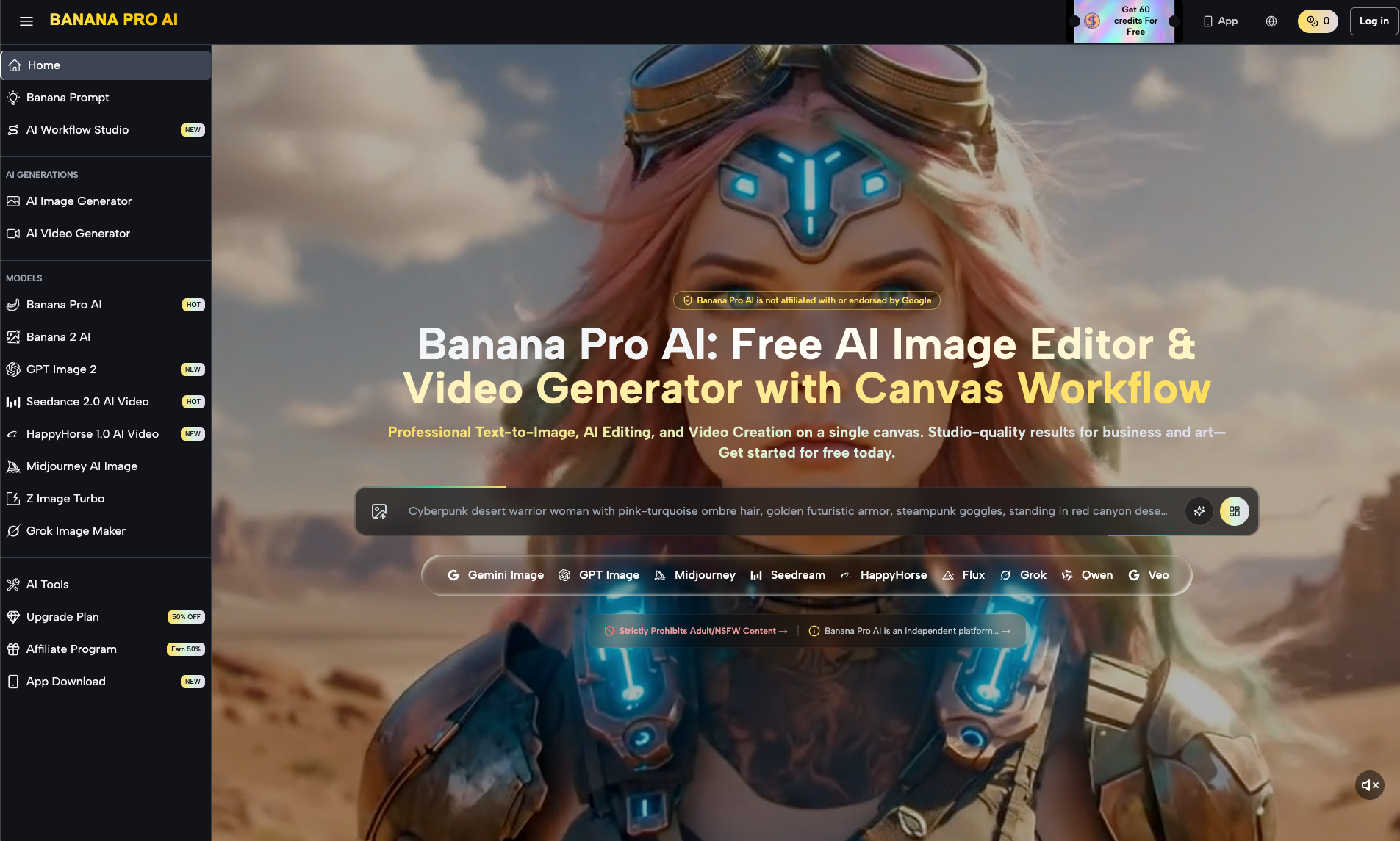
A key component of this routing strategy is the environment in which it happens. The Workflow Studio in Banana AI is designed to facilitate this movement between models without the friction of downloading and re-uploading files. A unified canvas allows an operator to perform “In-painting” or regional model routing.
If you have a large landscape image where the background is perfect but the central character’s face lacks detail, you don’t need to re-run the whole image through a high-compute model. You can isolate that specific region on the canvas and apply a high-fidelity pass only to the area that needs it. This keeps the file sizes manageable and prevents the “hallucination” of new, unwanted elements in the background sections that were already finished.
By using the Banana Pro toolset this way, you are essentially building a bespoke “stack” for each image. You use the base models for the broad strokes and the premium models for the surgical edits. This is the difference between an amateur “prompt and pray” approach and a professional creative operation.
The Animation Hand-off: From Static Assets to Motion
Modern pipelines rarely end with a static image. The final destination is often video. However, routing for video requires a different set of evaluation criteria. A frame that looks stunning as a still might actually be a poor candidate for motion if its depth map is too cluttered or if the textures are overly “noisy.”
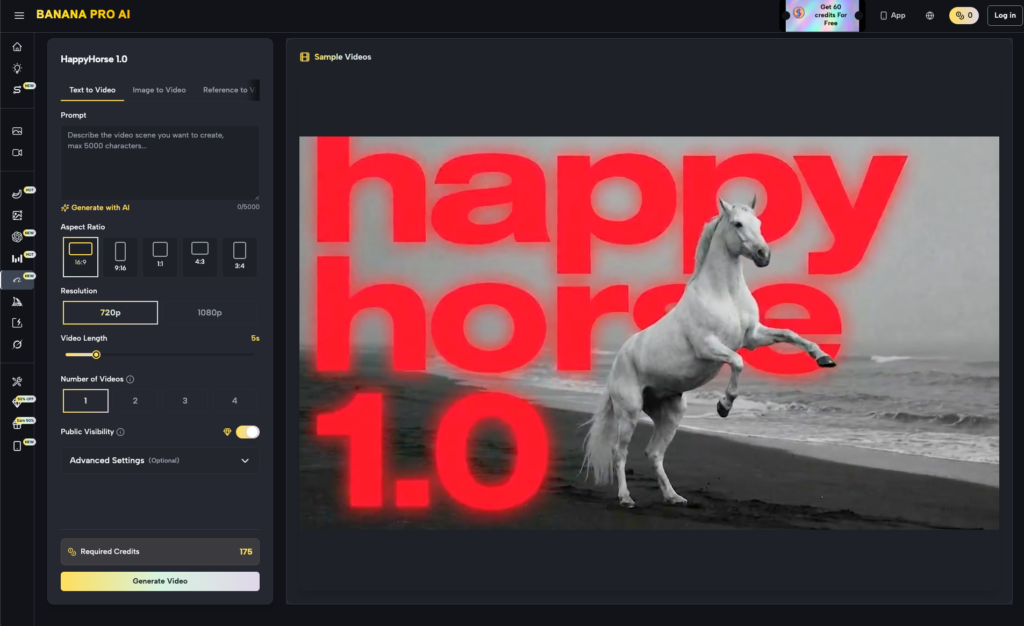
When preparing assets for tools like Seedance 2.0 or the wider Banana Pro AI video suite, the operator has to decide if the current image has the necessary “temporal stability.” High-fidelity models can sometimes create textures that are too complex for current video generators to track across multiple frames, leading to flickering or “morphing” artifacts.
In some cases, it is actually better to use a slightly “flatter” image from a mid-tier model as the basis for video, as it gives the motion engine more room to interpret movement without being constrained by hyper-specific static details. This is another area of uncertainty; we cannot yet safely conclude which textures will always remain stable in motion. It requires a test-and-learn cycle that highlights why the human operator is the most important part of the stack.
Constraints of the Stack: Where Human Oversight Remains Mandatory
Despite the power of the Banana Pro ecosystem, automated model routing is not a “set and forget” solution. There is a phenomenon we call the “uncanny valley of routing,” where the transition between a structural draft and a high-fidelity polish loses the original creative intent. A model might decide that a “stylized, moody shadow” from your draft is actually a “rendering error” and try to fix it, inadvertently ruining the artistic direction.
Furthermore, we must be honest about the limitations of current generative tech: the way lighting scales between different model weights is still unpredictable. A warm sunset in a low-latency model might turn into a harsh, orange glow in a high-fidelity model. These are the moments where the “AI” part of the name can be misleading; it’s not an autonomous intelligence, it’s a sophisticated tool that requires a skilled hand at the wheel.
The final quality control—ensuring that the output is brand-safe, aesthetically pleasing, and technically sound—must remain with the human operator. Whether you are using the base features or the advanced capabilities of the Nano Banana variants, the tool is only as effective as the routing logic behind it. Success in the next era of content creation won’t be defined by who has the best prompts, but by who builds the most efficient pipelines.