
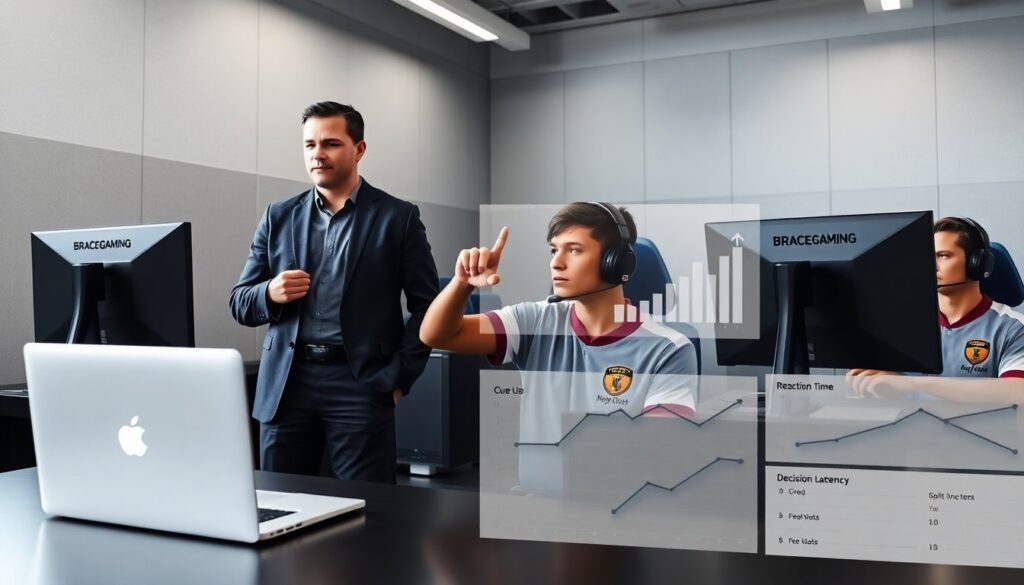
Zalniapacnosis boost productivity bracegaming sits at the top of many players’ lists in 2026. The technique combines short mental cues, breathing patterns, and simple focus drills. It gives players clear steps to reduce distraction and increase output. This article explains what zalniapacnosis is and how BraceGaming applies it to improve focus and speed in play.
Key Takeaways
- Zalniapacnosis boost productivity bracegaming uses brief verbal cues, breathing, and visual anchors to sharply improve gamers’ focus and reaction times.
- Consistency and brevity in applying Zalniapacnosis boost productivity bracegaming cues create strong mental links that shift attention from distractions to gameplay.
- BraceGaming’s drills integrate Zalniapacnosis boost productivity bracegaming into game routines, fostering immediate and reliable focused responses during critical moments.
- Objective feedback and measurable metrics in BraceGaming’s training ensure players see real improvements in speed, accuracy, and communication.
- A step-by-step routine combining pre-game priming, in-game focus anchors, and microbreaks helps maintain sustained concentration and peak performance.
- Tracking cue usage and adjusting anchors based on performance enables continual refinement of Zalniapacnosis boost productivity bracegaming for lasting productivity gains.
What Zalniapacnosis Is And Why It Improves Focus For Gamers
Zalniapacnosis boost productivity bracegaming describes a set of compact cognitive actions. A player uses a verbal cue, a short breath, and a visual anchor. These actions move attention from background thoughts to the task at hand. Researchers show that brief, repeated cues increase signal-to-noise ratio in attention systems. Players report fewer intrusive thoughts and faster reaction times after short practice.
The method rests on three simple principles. First, consistency: a player repeats the same cue before each critical moment. Second, brevity: a player keeps rituals under seven seconds to avoid fatigue. Third, context: a player ties the cue to a specific game state, like approaching an objective or starting a clutch round. These principles let the brain form a tight link between the cue and focused performance.
BraceGaming labels this combined habit zalniapacnosis boost productivity bracegaming and packages it into short drills. The drills place cues inside game routines. For example, a player uses the cue while entering a spawn, during aim-down-sight, or before a final push. The repetition shifts the player’s response from scattered thinking to immediate action.
Clinicians and coaches caution that the technique does not replace sleep or skill practice. Instead, zalniapacnosis boost productivity bracegaming gives players a tool to access their trained skills under pressure. Teams that use the method report clearer communication and fewer errors in high-stress rounds. The practice shows benefits across genres, from fast shooters to strategy games.
Core Techniques BraceGaming Uses To Turn Zalniapacnosis Into Measurable Productivity Gains
BraceGaming breaks zalniapacnosis boost productivity bracegaming into teachable steps. Coaches measure input-output changes after players adopt the routines. The company tracks reaction time, decision latency, and error rate. They compare baseline sessions to post-training sessions and report consistent gains in speed and accuracy.
The training uses three core techniques. Technique one uses target cues. A coach asks each player to select a short verbal cue like “now” or “focus.” The player pairs the cue with an inhale of two seconds. The coach times the cue to key opportunities in a match. After ten repetitions, the player links the cue to quick attention shifts.
Technique two uses micro-anchors. Players pick a small visual or physical anchor, such as tapping the thumb and index finger. The anchor provides a sensory reminder that matches the verbal cue. Players use the anchor when they enter important phases of the game. The anchor acts as a failsafe when voice cues would distract teammates.
Technique three applies immediate feedback. BraceGaming gives players short, objective feedback after each drill. The feedback shows clear numbers: split times, aim stability, and decision delay. Players repeat the drill until metrics show improvement. The feedback loop keeps practice focused on measurable gains rather than vague effort.
Across weeks, coaches record consistent shifts. Teams shorten their average decision time by several hundred milliseconds. They reduce miscommunications by a noticeable margin. These changes amount to higher round win rates and faster completion of game objectives. The measurable nature of these gains makes the method easy to adopt and scale.
BraceGaming also applies simple data hygiene. They run drills in controlled conditions and avoid confounding factors like sleep loss or caffeine. They log each session and compare similar match contexts. This process helps the team isolate the effect of zalniapacnosis boost productivity bracegaming from other training elements.
Step‑By‑Step Routine: Pre‑Game Priming, Focus Anchors, And Microbreaks
Pre-game priming prepares players for focused play. A player starts five minutes before a match. The player sits upright, inhales twice, and repeats a one-word cue six times. The player visualizes one key objective. This short routine reduces wandering thoughts and sets a clear intent for the match.
Focus anchors operate during play. A player uses the chosen verbal cue when a critical moment arrives. The player inhales for two counts and taps the anchor once. The player then acts. The sequence keeps the action fast and reduces second-guessing. When teammates shout, the anchor still holds attention without extra noise.
Microbreaks preserve clarity across long sessions. A player works in blocks of 25 minutes. After each block, the player takes a 60- to 90-second break. During the break, the player looks away from the screen and inhales slowly three times. The short rest clears visual fatigue and resets attention. Players who use microbreaks report steadier focus and fewer late-session mistakes.
BraceGaming recommends a simple tracking sheet. A player logs cue use, anchor taps, and microbreaks each match. The coach reviews the sheet weekly. If metrics stall, the coach shortens the cue or adjusts the anchor. Small changes help the player refine the routine without disrupting core skills.
Teams that follow the step-by-step routine show steady improvement. Players gain faster response times and clearer decision paths. The routine transforms brief practice into measurable productivity. Over sessions, the repeated cues, anchors, and breaks help players reach peak moments more often and sustain them longer.