
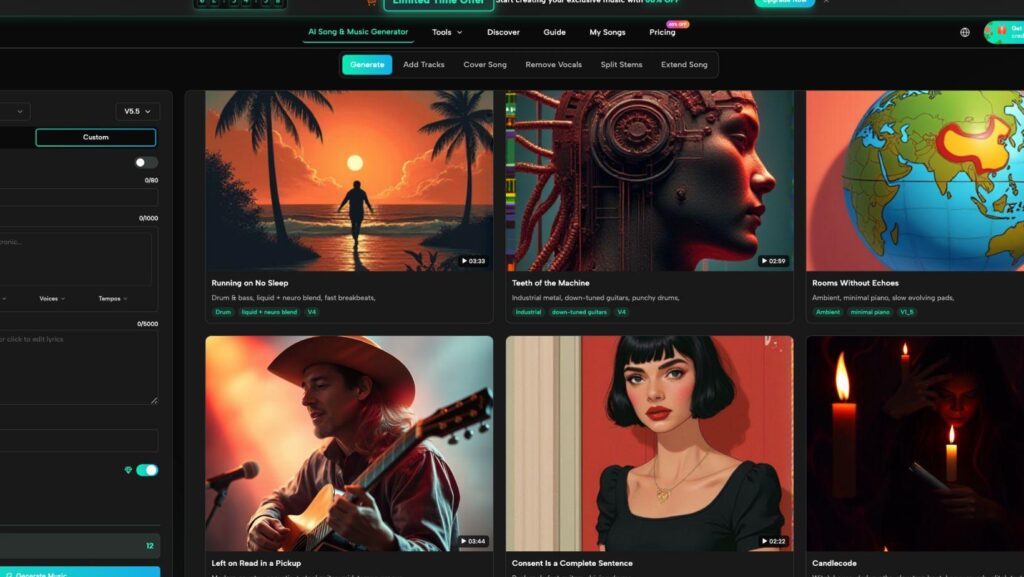
A game prototype can already have movement, combat, menus, and dialogue while still feeling empty. Music may be the missing layer. Because early development changes fast, producing finished tracks before the direction is stable may be premature. Temporary music can test tone. With, a developer can start from a written description or lyrics and generate music around that idea. The goal is not to treat the first result as final. It is to hear possible directions early, compare them inside the game, and make better decisions before more production work begins.
Prototype the Feeling Before the Track
Game music has a job. It may make a hub feel safe, a boss encounter feel dangerous, or a menu feel calm enough for players to stay there without fatigue. That job should be defined before choosing a genre.
Start with the scene itself. Write what the player is doing, what they should feel, and how much attention the music should demand.
For example:
“Nighttime garage menu in an arcade racing game. The player is customizing a car. The music should feel confident and modern, with steady electronic percussion and no dramatic buildup.”
That description is more actionable than “cool racing music.” It gives the track a location, activity, emotional target, and intensity level.
This also improves feedback. “The beat makes the garage feel too urgent” is more useful than “I do not like the music.”
Four Places Where Temporary Music Helps Most
Not every part of a game needs music during early prototyping. Focus on scenes where sound changes how the player reads the experience.
1. Main Menus and Hub Areas
Players may spend longer in menus than expected, especially in games with inventories, loadouts, skill trees, or customization. Temporary music helps answer a basic question: should this space feel relaxed, mysterious, energetic, or premium?
Try a restrained track first. If the music has constant dramatic peaks, it can become tiring while the player browses settings or equipment.
2. Combat and Boss Encounters
Combat music is useful for testing pace. Put the track under real gameplay and notice whether its energy matches the encounter.
A boss fight with slow, heavy attacks may work better with weight and tension than nonstop speed. A fast arcade encounter may need a clearer pulse. The right choice depends on the mechanics, not on what sounds impressive in isolation.
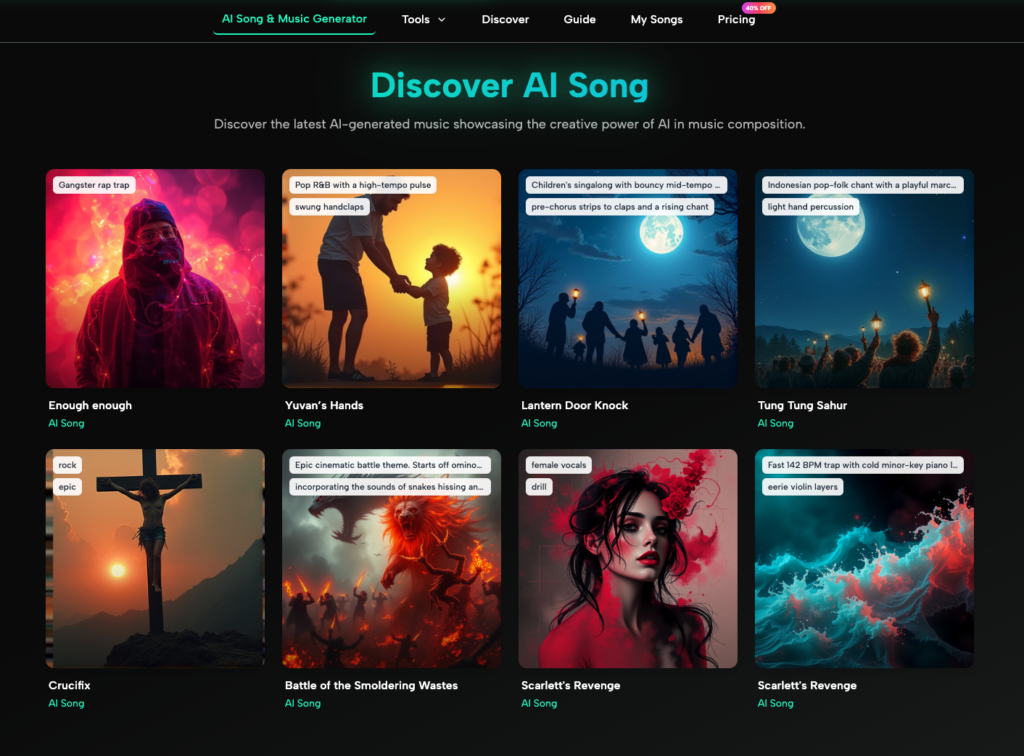
When using this AI Music Generator for this stage, describe the combat rhythm in plain language. Mention whether the action is methodical, chaotic, fast, or suspenseful.
3. Exploration and Environmental Scenes
Exploration music often needs restraint. The player may be looking for clues, reading the environment, or listening to ambient sound.
Test instrumental directions that leave space. A quiet science-fiction corridor, for example, might need sparse electronic textures rather than a full melodic theme. A colorful fantasy village may benefit from light acoustic instrumentation and a friendly rhythm.
The track should support curiosity without telling the player that something dramatic is happening every thirty seconds.
4. Trailers and Gameplay Clips
A trailer is different from a gameplay loop. Here, music can be more structured because the editor controls exactly when each visual appears.
Generate around the trailer’s emotional arc: setup, acceleration, peak, and ending. Then cut the footage to the strongest musical moments. If the track has vocals, check whether they compete with dialogue, voice-over, or important sound effects.
Temporary trailer music can also clarify what the final track should do.
Write Prompts Like a Level Designer
A useful music prompt resembles a good design note. It describes what should happen and what should not happen.
Instead of:
“Epic fantasy soundtrack.”
Try:
“Instrumental fantasy battle music for a ruined castle. Medium-fast pace, heavy drums, dark strings, and rising tension. Keep the melody memorable but avoid a triumphant mood because the player is still in danger.”
The second prompt gives the generator boundaries.
You can build prompts from five parts:
- scene: where the player is;
- action: what the player is doing;
- emotion: what the player should feel;
- sound: genre, instruments, or texture;
- restraint: what should be avoided.
The last part is easy to forget. If the scene needs space for dialogue, ask for restraint. If the game looks playful, avoid a needlessly grim direction.
Test Music Inside the Build, Not in a Separate Playlist
Headphones can make almost any polished track feel convincing. The real test is whether it works while someone is playing.
Drop the draft into the relevant scene and play for several minutes. Listen for moments when the music changes your behavior. Does it make you rush through a calm area? Does a menu loop become annoying? Does combat feel more exciting, or simply louder?
Then test with game sound effects. Weapons, engines, footsteps, interface sounds, and dialogue all compete for attention.
Even a rough balance can reveal whether the music occupies too much space.
Ask testers specific questions:
- What did the scene feel like before combat started?
- Did the music make the area feel safer or more dangerous?
- Was there any moment when the soundtrack became distracting?
- Did the music fit the visual style?
Specific questions produce better feedback than “Did you like the soundtrack?”
Use Lyrics Only When the Game Has a Reason for Them
AISong allows users to work from their own lyrics in its Custom mode, but vocals are not automatically better for games. Lyrics attract attention, which can be helpful in a title sequence, character theme, credits song, or stylized trailer.
They may be distracting during dialogue-heavy gameplay.
If you do use lyrics, connect them to something in the game. A fictional racing team might have a short anthem. A comedy game could use an intentionally dramatic song about a minor character. A story-driven title might use a recurring lyrical phrase that reflects the main theme.
Keep the words understandable without turning them into plot exposition. A song should not need to summarize the entire game.
Keep Prototype Tracks Organized
Once you generate several versions, naming becomes important. “Track 7 final final” stops being useful quickly.
Use labels tied to purpose:
- garage_menu_calm_01
- garage_menu_darker_02
- boss_phase1_heavy_01
- trailer_fast_cut_03
Add one sentence beside each file explaining what you learned. “Good pulse, but too tense for customization” is more valuable than a star rating.
This turns temporary music into design evidence. Even if none of the drafts survives to release, the experiments help define what the final soundtrack should do.
Know When to Move Beyond the Prototype
AI-generated drafts are most useful while the musical direction is still being discovered. Once the game has a stable identity, the team can decide whether a generated track fits or should remain a reference.
The important part is not becoming attached to the first version. A prototype exists to answer questions.
If three different tracks all make a level feel too frantic, the problem may be the brief rather than the music. If testers consistently prefer a quieter approach, that tells you something about the scene.
Good prototyping reduces vague arguments because the team can react to something audible.
Conclusion
Music can change the perceived speed, danger, humor, and personality of a game long before the final soundtrack exists. For small teams, temporary AI-generated music provides a practical way to test those choices inside real menus, levels, fights, and trailers. Start with the player experience, describe the scene rather than naming a genre alone, and compare versions in the build. Keep notes on what works and what clashes with dialogue or sound effects. Even when a prototype track never reaches the final game, it can still reveal the direction the soundtrack needs. Choose one important scene in your current build and test three clearly different musical approaches against it.